 SafiLink
Letting someone into your home to clean, cook, or look after your children is one of the most trust-based decisions a household makes — and in Kenya, it's still mostly done through word of mouth. That's not necessarily wrong, but "my neighbour's cousin recommended her" isn't the same as actually verifying who you're hiring.
Here's a practical checklist to work through before anyone starts, whether you found them through a referral, an agency, or an app.
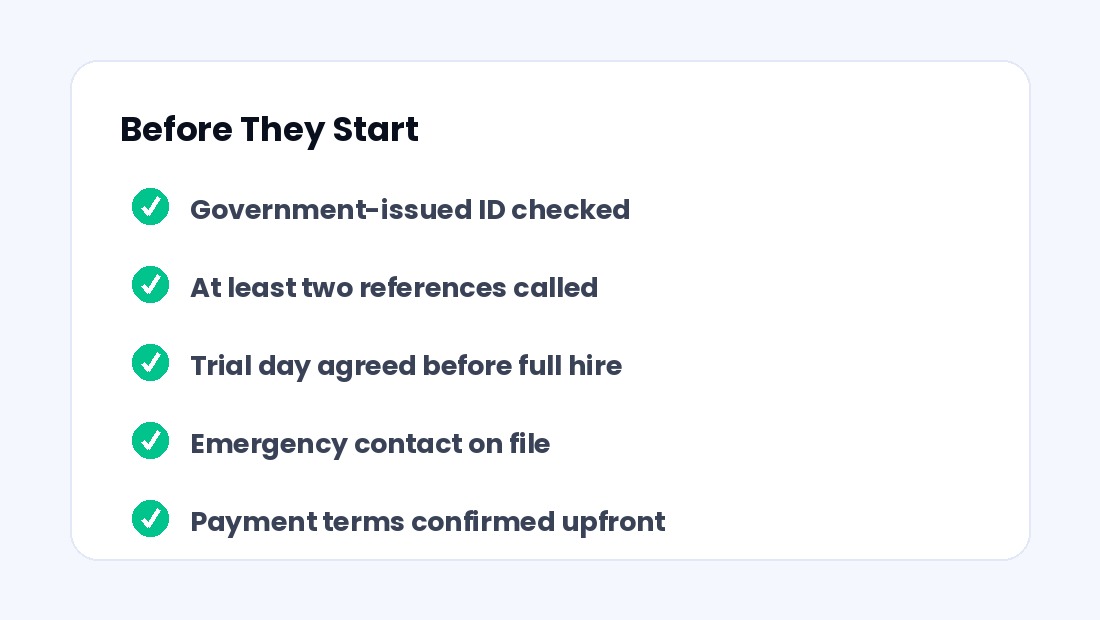
1. Ask for a real, government-issued ID
At minimum, this should be a national ID card. Take a photo of it (with their knowledge) and keep it on file. This single step is the biggest deterrent against anyone using a false identity, and it means you have something concrete to hand to police if something ever does go wrong.
2. Call at least two references — not just read them
A phone number on a CV means nothing until you've actually dialled it. Ask the reference concrete questions: How long did they work together? Would they hire them again? Was anything ever missing? People are usually more honest on a phone call than they'd ever be in a text.
3. Get an emergency contact, not just a phone number
Ask for the name and phone number of a close relative — a parent, sibling, or spouse. This isn't about surveillance; it's basic safety infrastructure for both sides. If there's ever a medical emergency, a dispute, or you simply can't reach the person, you're not stuck.
4. Start with a trial day before a full commitment
A single paid trial day tells you more than any interview. Watch how they handle instructions, how they treat your space, whether they show up on time. Be upfront that it's a trial — most reliable candidates expect this and won't be offended by it.
5. Agree on payment terms in writing — even if it's just a text
Rate, payment day, what happens if they're sick, notice period if either side wants to end the arrangement — put it in a message you both keep. Verbal-only agreements are where most disputes start, usually from a genuine misunderstanding rather than bad faith.
Red flags worth taking seriously
- Refuses to show ID or provide any references at all
- References that don't pick up, or numbers that seem to belong to the applicant rather than a separate person
- Pressure to skip the trial day and start immediately
- Vague or shifting answers about where they've worked before
None of these automatically mean someone is dishonest — but they're worth slowing down for rather than waving through because you're in a hurry to fill the role.
The underlying principle
Every step above is really the same idea applied five different ways: verify before you trust, not instead of trusting. Most people are exactly who they say they are — but the whole point of a checklist is that it protects you in the cases where they aren't, without requiring you to be suspicious of everyone by default.
This is also, not coincidentally, the exact logic SafiLink's provider verification is built around — ID checks, a live selfie match, and admin review before anyone can accept a job through the app. If you'd rather that vetting happen automatically instead of doing it yourself, that's what we built it for. But even if you never use the app, the checklist above works just as well for a hire you found any other way.
That's very educational