 SafiLink
Nairobi's rainy season doesn't just mean carrying an umbrella, it changes what "keeping a clean home" actually requires. Mud gets tracked in faster than it can be swept out, damp air gives mold a head start it doesn't get the rest of the year, and laundry that would dry in an afternoon during dry season can sit damp for days. None of this is really about cleaning harder, it's about adjusting where and how often you clean to match what the season actually throws at a home.
Why rain changes the cleaning equation
Three things shift at once during heavy rains: more dirt enters the house per day, humidity gives mold and mildew a real head start, and outdoor drying stops being reliable. Treating rainy season with the same routine as dry season usually means constantly feeling behind, not because anyone's cleaning less, but because the routine wasn't built for what's actually happening.
Managing mud at the door, not the floor
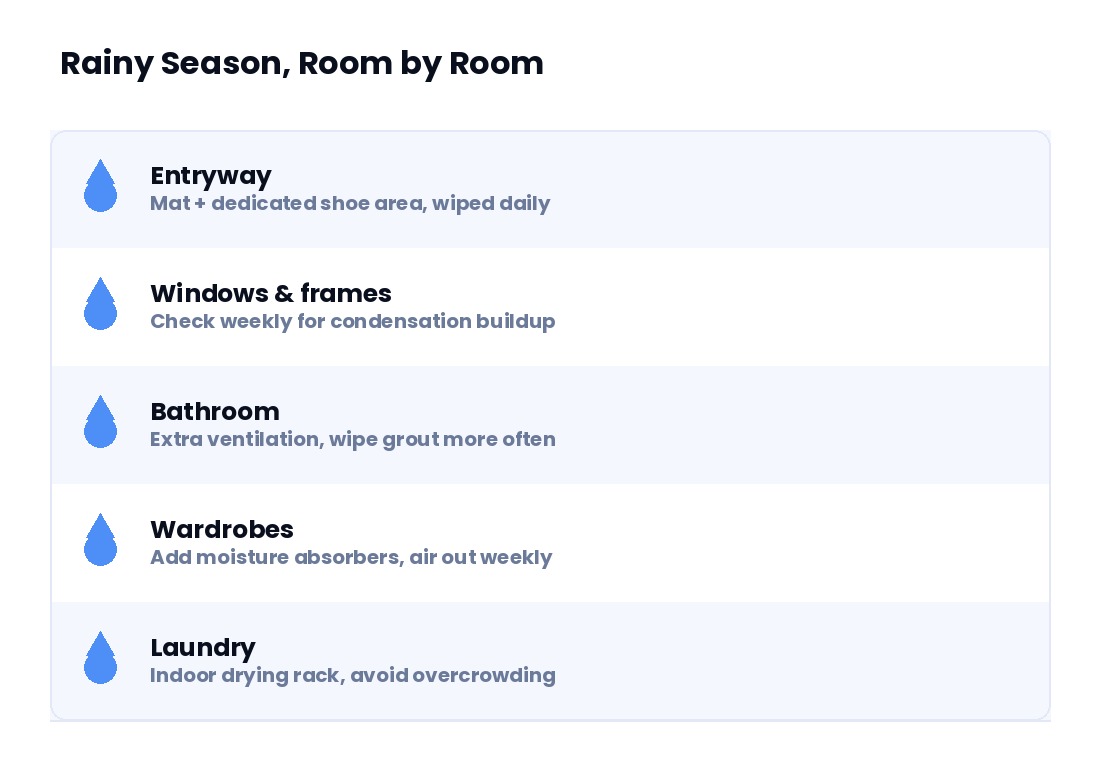
The most effective fix happens before mud ever reaches your floors. A proper mat at every entrance, a designated spot for wet shoes, and wiping that specific zone daily rather than waiting for it to spread, saves far more effort than mopping the whole house more often. If mud does get tracked further in, address it while damp rather than letting it dry and grind into the flooring, dried mud is measurably harder to lift.
Mold and mildew: catching it early
Mold doesn't appear overnight, it builds gradually in exactly the conditions rainy season creates: trapped moisture, poor airflow, and surfaces that stay damp longer than usual.
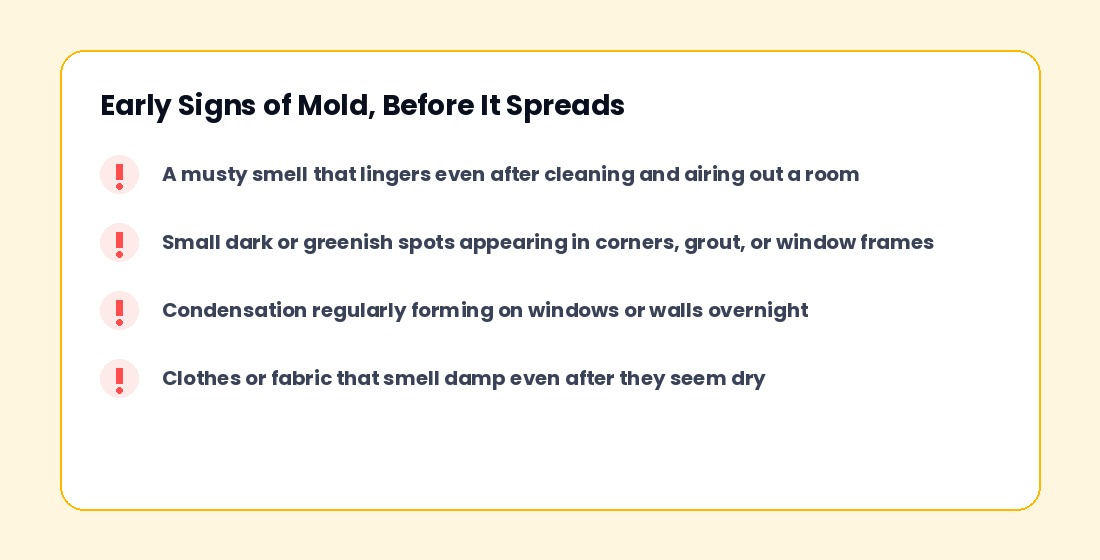
If you catch any of these early, a thorough clean with proper ventilation afterward usually handles it. Left for weeks, it becomes a much bigger job, sometimes requiring replacing affected material entirely. The single highest-leverage habit here is airflow: opening windows during dry spells between rains, even briefly, does more to prevent mold than almost any product.
Laundry, without the sun
This is where rainy season causes the most day-to-day frustration. A few adjustments help significantly: wash smaller loads more frequently rather than saving up a huge pile that then has nowhere to dry, use an indoor drying rack positioned near airflow (a window, a fan, even a doorway) rather than a closed room, and avoid overcrowding the rack, clothes packed too tightly just trap moisture between them instead of drying. If clothes do pick up a damp smell despite drying, a second short rinse cycle before redrying usually clears it, the smell is typically bacterial growth from slow drying, not dirt that was missed the first time.
Floors and carpets need a different rhythm
Carpets in particular hold onto moisture and odor far longer than hard flooring during humid months. If a carpet gets properly wet, from tracked-in rain or a leak, drying it thoroughly and quickly matters more than the cleaning product used, trapped moisture under a carpet is exactly the mold scenario described above, just hidden from view until the smell gives it away.
When it's time to call in a deep clean
Regular upkeep handles day-to-day mud and dust, but rainy season is often when homes are actually overdue for a proper deep clean, carpets, upholstery, and the corners that don't get attention in a quick daily wipe-down. If you're noticing any of the mold warning signs above, or it's simply been months since carpets and upholstery had real attention, that's the signal, not a fixed calendar date.
Where SafiLink fits
SafiLink's house cleaning and carpet cleaning services are built for exactly this kind of seasonal deep clean, handled by identity-verified providers and paid securely through M-Pesa escrow, released only once the job's actually done to your satisfaction. Whether you handle the daily rainy-season routine yourself and just want help with the deeper seasonal reset, or want the whole thing off your plate, the same verification and payment protection applies either way.
Rainy season doesn't have to mean a losing battle against mud and damp. It just means a slightly different routine, applied consistently, before small problems become bigger ones.
Be the first to comment.